
पापकृत् कोऽत्र
- Ramgopal Divakar
- Oct 10
- 4 min read
Updated: Oct 13
कश्चन राजा | अत्यन्तं करुणावान् सः प्रजासु निर्धनेभ्यः अन्नदानं बहुधा करोति स्म | एवं राज्ञा सेवमानाः नगरवासिनः नियततया रुचिपूर्णं भोजनं आस्वादन्ते स्म | प्रासादप्राङ्गणस्य अधरभागे वटवृक्षानां मध्ये अनाच्छादितं विशालं स्थलम् आसीत् यत्र भोजनं परिवेषितम् भवति | एकदा यावत् पाकशालायाः कर्मकराः घटपूरितं भोजनं मूर्ध्नि वहन् गतवन्तः तावत् आकाशे पक्षिराजगृहीतः आसन्नमृत्युः कश्चन सर्पः विषं उद्वमन् श्येनेन अयुध्यत |
There was a king. He was very kind and quite often fed the poor and his subjects. Consequently, the citizens often enjoyed the food served by the king. Food was served at a wide open place at the rear of the palace courtyard . Once, while the kitchen servants were carrying pots full of food on their heads, a dying snake in the grip of the king of birds, the eagle, was spitting poison and fighting it.
पञ्चषाः इमे पतन्तः वायुप्रहृता विषमयबिन्दव: यद्यपि आकाशात् बहुदूरं गन्तव्या: अभवन् तथापि शरावरहितमहाभाण्डे कस्मिंश्चित् तदीयं पायसं प्राप्नुवन् | तद्विषं भोजनेन मिश्रितं जातम् | कथमपि एतत् दृश्यं केनापि न विलोकितम् | मध्याह्नभोजने समाप्ते सति शताधिकाः केचन तत् विषप्रदं भोजनं भुक्त्वा मृताः अभवन् |
The few drops of poison, despite being struck by the wind and traveling through the sky, somehow reached a cauldron of payasam, which was uncovered and had no lid. The poison mixed with the payasam. Somehow, no one saw it. When lunch was over, a few hundreds died having consumed the poisoned food.
अपरस्मिन् लोके एतत् सर्वम् अवलोकयन् चित्रगुप्तः अन्तकं धर्मराजं पृष्टवान् कृतपापस्य कर्मफलं इदं केन अशनीयम् | भवान् इमं महादातारं राजानं उत उग्ररूपं सर्पं चिनोति | उत पक्षिराजं श्येनम् इति | यमराजः किचित् कालं विचिन्त्य अवोचत् वस्तुतः राज्ञः उद्देशः तु श्रेयस्करः | सर्पस्य विषवमनं तु स्वाभाविकम् | प्रकृत्या श्येनाः सर्पभक्षका: अपि सन्ति खलु | अतः पापकर्मणः गणना न तेषु योजनीया | अयं विषयः अग्रे इतोऽपि विमर्शनीय: अतः अलं आलोचनेन इदानीम् इति यमराजः स्वाभिप्रायं प्रकटितवान् |
Up in the heavens, Chitragupta seeing all this spoke to Yama, “Who would pay the price of the sins? Would you pick the king, the great giver or the fierce snake? Or the king of birds, the eagle?” Yama reflected for a while and said, “factually, the king’s intent is worthy of praise. Snakes spitting venom is due to their nature. Likewise, eagles are snake-eaters in the wild naturally. Consequently, we shouldn’t charge them for these sins. We need to ponder over this some more so for now I would say let us keep it aside.”
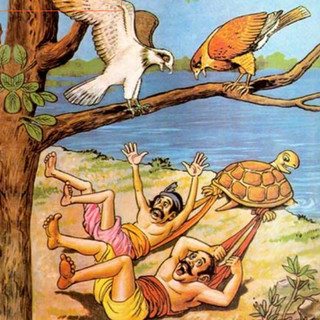
तावता अपघातेन शोकतप्तः राजा यद्यपि अत्यन्तं खिन्नः आसीत् तथापि मङ्गलकार्यं न त्यक्तव्यम् इति मत्वा सः कृतनिश्चयः सन् पुनः सावधानं भोजनसेवादिकं कार्यम् अन्वर्तत | केषाञ्चित् दिनानाम् अनन्तरं केचन पथिकाः पार्श्ववर्तिनः समीपग्रामस्थाः सेवादिने आययुः | ते वृक्षचछायायाः अधः उपविष्टं जनद्वयं अपृच्छन् | श्रीमन्तौ अद्यतनभोजनं सेवितुं भोक्तारः वयम् आजग्मुः अतः भोजनाय स्थलस्य पन्था: ज्ञायते वा इति प्रष्टुकामाः आसन् |
By then, the king grieving the accident, although being quite sad, thought that good acts should not be given up and thus determined to begin serving food even more cautiously. After a few days, some travellers living nearby at a closeby village came on the day food was served. They asked a couple of folks under a tree. “Sir we have come to eat the food today. Could you tell us where it is? We’d like to know please.”
तौ उभौ हसन्तौ उपहासपूर्वकम् उक्तवन्तौ किं मुमूर्षा बलवती जाता? इति |
Laughing, they both answered cockily, “You guys want to die?”
दिग्भ्रान्ताः पथिकाः किं वदति भोः इति पुनः पप्रच्छुः |
The confused travellers asked, “What are you saying”
यैः अत्र खाद्यते तेषां प्राणवियोगः अवश्यं अचिरात् भवेत् इति उक्त्वा तौ आपतितं दुष्प्रसङ्गं विवृतवन्तौ |
“Whoever eats, they are sure to die soon” and saying so they both narrated the recent events which had turned out to be bad.
वृत्तान्ते श्रुते सति भीताः प्रकम्पनाः अपरनगरवासिनः विद्यमानां बुभुक्षां विस्मरन्तः ततः पलायन्त | यमराज: इदं सर्वं निरीक्षमाणः चित्रगुप्तं निर्णयपूर्वकं उक्तवान् | अयि भोः तत्पापकर्माणि एतयोः आरोप्येरन् इति | एतौ किमपि उत्कृष्टं कार्यं दीनसेवां इत्यादीनि न कुरुतः | अपि च ये परोपकारिणः उत्तमजनाः सन्ति तेषु मिथ्या दोषारोपणं अन्येषु क्रियते ताभ्याम् | अतः तौ एव इदं दुष्फलं अनुभूयताम् इति मे मतिः इति |
On hearing what had happened, the neighboring villagers forgot their hunger and fled trembling. Yama, watching all this decidedly told Chitragupta. You need to charge these two guys for the sins of those who died. They are neither doing uplifting work nor are they doing acts of service etc. Further, they are disregarding the good work done by great men but instead are accusing them of wrong doing. Therefore, my conclusion is these two men should suffer the consequences of the actions that led people to die at the luncheon.
वस्तुतः वयं अपि तथा प्रायः चिन्तनं विना
अन्येषां सज्जनानां सत्कार्यस्य निषेधं कुर्मः | एवं
दुष्कार्यं आचरणेन प्रायः तेषां अशुभं कर्मफलं अस्माभिः भोक्तव्यं भवति | अत्र आलोचना अवधातव्या |
In fact, we tend to stop the acts of great men when we behave without thinking. By doing such a wrong thing, we have to suffer the bad results of those men. We need to think before we act.
Comments